
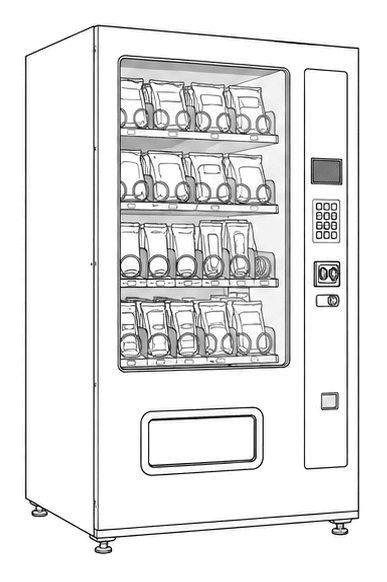
Not Cooling Diagnostic Flow
Other Other 10coldualadapt
Not Cooling Diagnostic Flow
Investigate why the machine is not maintaining cold product temperature. Covers airflow, condenser, door seal, compressor, and temperature sensor checks.
Qualified technician handoff: stop before live electrical testing, sealed-system refrigeration work, compressor service, or protected-compartment access unless a qualified technician is handling the work.
- Visible refrigerant oil or hissing sound: Sealed system leak suspected. Stop all work on refrigeration. Requires manufacturer-or-licensed technician.
- Compressor extremely hot with acrid smell: Immediately unplug. Allow to cool. Do not re-energize. Hand off to qualified technician.
Checklist
Guided Diagnostic Steps
Work from low-risk checks toward technician-level inspection only when evidence supports it.
You can read or print the route now. The first checkbox click opens the service contact gate.
- 1
Check Airflow Clearance Around Machine
operator-intermediatelowEnsure at least several inches of clearance on all sides and rear of the machine where vents are located. Remove any boxes, product, or debris blocking airflow.
Expected: Machine has unobstructed airflow on vented surfaces.
Evidence to note: photo
- 2
Inspect and Clean Condenser Coil
operator-intermediatehighUnplug the machine. Locate the condenser coil (typically at the bottom rear). Shine a flashlight through the coil fins. If blocked with dust or lint, clean gently with a condenser brush and vacuum.
Qualified technician handoff: stop before live electrical testing, sealed-system refrigeration work, compressor service, or protected-compartment access unless a qualified technician is handling the work.
Flashlight or Work LightCondenser Coil BrushExpected: Condenser coil fins are clean and air can pass through freely.
Evidence to note: photo
- 3
Check Compressor Run State
operator-intermediatehighPlug in the machine and allow several minutes for the thermostat to call for cooling. Place your hand near the compressor (do not touch directly). You should feel vibration and hear a steady low hum. If the compressor clicks but does not run, note that.
Qualified technician handoff: stop before live electrical testing, sealed-system refrigeration work, compressor service, or protected-compartment access unless a qualified technician is handling the work.
Flashlight or Work LightStop conditions- Compressor area is extremely hot to proximity – may be overheating. Unplug and allow to cool.
Expected: Compressor vibrates and hums steadily, indicating it is running.
Evidence to note: note
- 4
Inspect Door Gasket and Seal
operator-intermediatelowClose the door on a dollar bill or thin paper strip at several points around the perimeter. The paper should be gripped firmly. Test top, bottom, left, right, and corners.
Expected: Door gasket grips paper firmly at all test points.
Evidence to note: note
- 5
Verify Temperature Sensor Plausibility
operator-intermediatelowPlace an independent thermometer inside the cabinet near the temperature sensor location. Allow 30 minutes with door closed. Compare the independent reading to the machine's displayed temperature (if available).
Independent ThermometerExpected: Independent thermometer reading aligns reasonably with machine temperature reading.
Evidence to note: meter-reading
Tools for this route
Parts status
Exact public parts list not verified yet. Use this route to identify the system before ordering.
Candidate areas for part verification
Other Possible Issues
Switch routes if this symptom is not the closest match.