
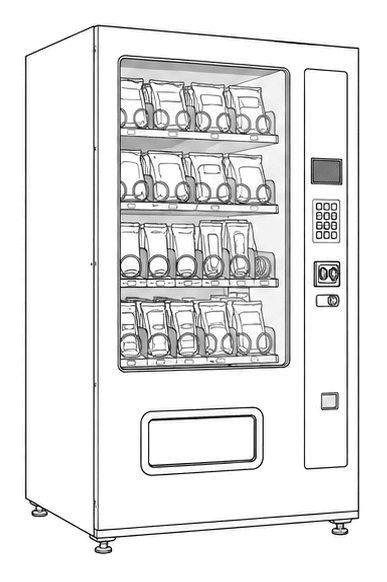
Power-On Failure Diagnosis
Rowe Rowe 7800 Rowe Deluxe
Power-On Failure Diagnosis
Systematic approach to identify why the machine shows no signs of life, starting from the wall outlet and working inward.
Qualified technician handoff: stop before live electrical testing, sealed-system refrigeration work, compressor service, or protected-compartment access unless a qualified technician is handling the work.
- Repeated fuse failure: Escalate immediately. Stop all attempts. Qualified technician required.
- Burning smell at any point: Disconnect power immediately. Do not re-energize until cause is identified and corrected.
Checklist
Guided Diagnostic Steps
Work from low-risk checks toward technician-level inspection only when evidence supports it.
You can read or print the route now. The first checkbox click opens the service contact gate.
- 1
Verify Wall Outlet Power
operator-intermediateunskilledUsing a known-good lamp or outlet tester, confirm the wall outlet provides power. If outlet is dead, the issue is building electrical, not the machine.
Stop conditions- Outlet shows incorrect wiring polarity or ground fault
Expected: Outlet tester shows correct wiring and voltage present.
Evidence to note: meter-reading
- 2
Inspect Power Cord and Connections
operator-intermediateunskilledWith machine unplugged, visually inspect the full length of the power cord. Check both plug and machine-end connections for damage, looseness, or discoloration.
Stop conditions- Cord is cut, frayed, or shows exposed copper
- Plug shows burn marks
Expected: Power cord is intact with no visible damage.
Evidence to note: photo
- 3
Check Main Fuse or Circuit Breaker
operator-intermediatehighWith machine unplugged, locate the main fuse or circuit breaker. Inspect for blown fuse element or tripped breaker position. If a fuse is blown, do not replace it until the cause is investigated.
Stop conditions- Fuse blown and burning smell present — stop and hand off
Expected: Main overcurrent protection is in normal (not tripped) state.
Evidence to note: photo
- 4
Investigate Blown Fuse Root Cause
operator-intermediatehighDo not replace the fuse yet. Visually inspect wiring harnesses, the power supply area, and major loads for signs of short circuit, overheating, or water intrusion. Document findings.
Stop conditions- Visible short circuit or burnt wiring
- Water intrusion found near electrical
Expected: Root cause of overcurrent condition identified before fuse replacement.
Evidence to note: photo
- 5
Replace Fuse with Correct Rating
operator-intermediatehighReplace blown fuse with one of identical type and rating only. Using an incorrect fuse rating is a fire hazard. Power on and observe.
Stop conditions- New fuse blows immediately
Expected: Machine powers on normally. Fuse holds.
Evidence to note: note
- 6
Check Controller Status Indicators
operator-intermediatehighObserve the controller board for any status LEDs, diagnostic indicators, or signs of activity. Note whether the board responds to power cycling.
Stop conditions- Burning smell from controller area — disconnect immediately
Expected: Controller shows some sign of activity — LED blink, display initialization, or relay click.
Evidence to note: note
Tools for this route
Parts status
Exact public parts list not verified yet. Use this route to identify the system before ordering.
Candidate areas for part verification
Other Possible Issues
Switch routes if this symptom is not the closest match.