
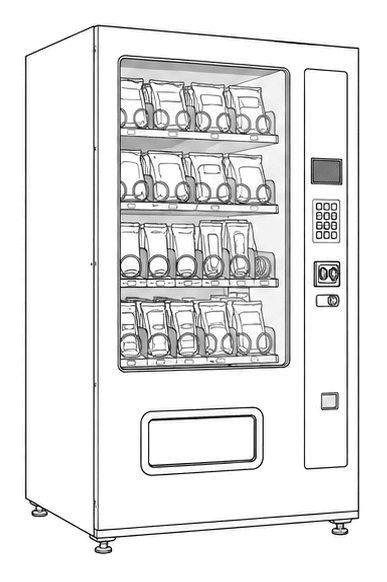
Insufficient Cooling Diagnostic
Royal Vendors Other 436
Insufficient Cooling Diagnostic
Guided isolation of refrigeration underperformance through door seal verification, airflow assessment, condenser condition, and compressor activity checks.
Qualified technician handoff: stop before live electrical testing, sealed-system refrigeration work, compressor service, or protected-compartment access unless a qualified technician is handling the work.
- Compressor extremely hot with repeated clicking: Unplug immediately. Compressor may be in thermal overload. Allow to cool and investigate start components.
- Oil visible near compressor: Possible refrigerant leak. Do not operate. Escalate to licensed refrigeration technician.
- Ice buildup exceeds ¼ inch on evaporator: Defrost issue likely. Do not chip ice. Allow to melt naturally and investigate defrost system.
Checklist
Guided Diagnostic Steps
Work from low-risk checks toward technician-level inspection only when evidence supports it.
You can read or print the route now. The first checkbox click opens the service contact gate.
- 1
Inspect door seal
operator-intermediatelowClose the door on a dollar bill at several points around the perimeter. The bill should have slight drag. If it slides freely, the seal is compromised.
Stop conditions- glass cracked
- door hinge visibly broken
Expected: Consistent light drag at all test points around the door.
Evidence to note: note
- 2
Check condenser cleanliness
operator-intermediatelowWith the machine unplugged, visually inspect the condenser coil. If coated in dust or lint, clean gently with a soft brush or vacuum with brush attachment.
Qualified technician handoff: stop before live electrical testing, sealed-system refrigeration work, compressor service, or protected-compartment access unless a qualified technician is handling the work.
Soft bristle brush or vacuum with brush attachmentStop conditions- condenser fins damaged or corroded
Expected: Condenser fins are visibly clean with open air passages.
Evidence to note: photo
- 3
Verify evaporator airflow
operator-intermediatelowWith the machine running, carefully feel for consistent airflow from the evaporator fan discharge area inside the cabinet. Do not reach near fan blades.
Stop conditions- unusual fan noise such as grinding or rattling
Expected: Steady, even airflow felt across the discharge opening.
Evidence to note: photo
- 4
Assess compressor activity
technician-advancedhighListen for compressor hum and feel the compressor housing for vibration indicating operation. If compressor is not running but is cool, check thermostat or sensor signal. If compressor is extremely hot and not running, it may be in thermal overload.
Qualified technician handoff: stop before live electrical testing, sealed-system refrigeration work, compressor service, or protected-compartment access unless a qualified technician is handling the work.
Infrared or probe thermometerStop conditions- compressor clicking repeatedly
- burning smell
- oil leak visible near compressor
Expected: Compressor vibrates and hums steadily, cabinet temperature gradually decreases.
Evidence to note: photo
Tools for this route
Location Help
Where to find this
Use this as orientation before touching the machine. It is location help, not a repair instruction.
Start at the customer delivery bin and product drop path; clear visible product and debris before moving to internal checks.
- Encloses product inventory, maintains thermal seal, and provides customer-facing product visibility through a glass-front panel.
- outer door frame
- glass panel
- door seal or gasket
Do not open sealed-system or compressor areas unless a qualified refrigeration technician is handling the work.
cabinet drink refrigeration bay
 compressor
 condenser fan
Parts status
Exact public parts list not verified yet. Use this route to identify the system before ordering.
Candidate areas for part verification
Other Possible Issues
Switch routes if this symptom is not the closest match.