Bill Validator Not Accepting Bills — Diagnostic Flow
VendnetUSA 3053 / 3054
Bill Validator Not Accepting Bills — Diagnostic Flow
Guided diagnosis for a bill validator that rejects or fails to pull in currency. Covers cleaning, harness verification, option-switch configuration, functional testing, and escalation.
- Validator harness shows signs of overheating or melting: Disconnect power immediately and escalate to qualified technician.
- Burning smell or visible smoke from validator area: Disconnect power immediately, evacuate the area if necessary, and escalate.
- Issue recurs within 48 hours of attempted fix: Escalate for root-cause analysis — do not repeat the same fix.
Checklist
Guided Diagnostic Steps
Work from low-risk checks toward technician-level inspection only when evidence supports it.
You can read or print the route now. The first checkbox click opens the service contact gate.
- 1
Clean Bill Validator Sensor Path
operator-intermediatelow-voltagePower down the validator or the machine. Using a lint-free cloth or approved cleaning card, gently wipe the sensor optics inside the bill transport path. Remove any visible debris, dust, or sticky residue.
Expected: Sensor path is visually clear with no obstructions.
Evidence to note: meter-reading
- 2
Inspect Validator Harness Connection
operator-intermediatelow-voltageWith the machine powered off, visually and physically inspect the harness connector at the validator. Confirm it is fully seated, no pins are bent or corroded, and no wires are pulled out of the connector body.
Expected: Harness connector is fully seated with no visible damage.
Evidence to note: meter-reading
- 3
Reseat Validator Harness Connector
operator-intermediatelow-voltageDisconnect the validator harness connector, inspect pins for damage, and reconnect it firmly until it clicks or seats fully. Power the machine back on.
Stop conditions- If connector pins are bent or broken, the harness requires replacement — escalate.
Expected: Harness is securely reconnected.
Evidence to note: meter-reading
- 4
Verify Validator Option Switch Configuration
operator-intermediatelow-voltageLocate the option switch module on the bill validator (if present). Without changing settings yet, compare the current switch positions against the expected configuration for your account. If you do not have documentation of the correct settings, contact your operations lead or the validator manufacturer before making changes.
Stop conditions- If you do not know the correct switch configuration, do not guess — escalate to your operations lead.
Expected: Option switches are set to the correct positions for your account's acceptance requirements.
Evidence to note: meter-reading
- 5
Correct Validator Option Switch Settings
operator-intermediatelow-voltageUsing a small insulated tool, set each option switch to the position documented for your account's requirements. Only change one switch at a time and note the before and after positions. Power-cycle the validator after changes.
Expected: Switches are in the correct positions and validator restarts normally.
Evidence to note: meter-reading
- 6
Functional Test With Known-Good Bills
operator-intermediatelow-voltageInsert a crisp, unmarked bill of a denomination the validator is designed to accept. Observe whether the validator pulls the bill in, validates it, and stacks it. Test at least two denominations if available.
Expected: Validator accepts, validates, and stacks each test bill.
Evidence to note: meter-reading
- 7
Swap With Known-Good Validator (If Available)
operator-intermediatelow-voltageIf a known-good validator of the same model is available, swap it into the machine. Connect the harness and power-cycle. Test with the same test bills. This isolates whether the issue is the validator or the machine-side harness or controller.
Expected: Known-good validator works in the machine, confirming the original validator is faulty. OR Known-good validator also fails, pointing to a machine-side issue.
Evidence to note: meter-reading
- 8
Issue Resolved — Record and Feedback
operator-intermediatelow-voltageDocument the root cause, the fix applied, and the time spent. Submit a Kaizen feedback entry noting any process improvements or patterns observed.
Expected: Repair record is complete and feedback is submitted.
Evidence to note: meter-reading
- 9
Escalate to Qualified Technician or Manufacturer Support
operator-intermediatelow-voltageThe diagnostic steps have not resolved the issue or have encountered a blocked condition. Record all findings, test results, and observations. Hand off to a qualified vending technician or contact the validator manufacturer's technical support line.
Expected: Complete handoff documentation provided to the next level of support.
Evidence to note: meter-reading
Tools for this route
Location Help
Where to find this
Use this as orientation before touching the machine. It is location help, not a repair instruction.
Start at the front door payment column; match the display, keypad, coin, bill, or card device to the symptom before opening deeper panels.
- Accepts and validates bills and coins, communicates acceptance or rejection to the controller, and tracks cash totals.
- Bill validator
- coin mechanism
- payment harness
Do not open energized or protected electrical areas unless a qualified technician or licensed electrician is handling the work.
 cabinet glass front
 control board generic
 wiring harness
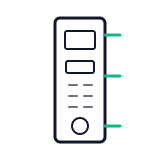 payment column
Parts status
Exact public parts list not verified yet. Use this route to identify the system before ordering.
Candidate areas for part verification
Other Possible Issues
Switch routes if this symptom is not the closest match.