
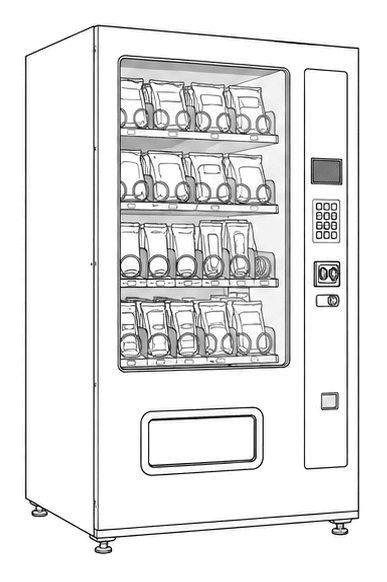
No Power to Machine - Diagnostic Flow
VendnetUSA 3653 / 3654 / 3655 / 3656 / 3657 / 3658 / 3629 / 3630
No Power to Machine - Diagnostic Flow
This diagnostic flow systematically checks the entire power path, starting from the wall outlet all the way to the main control board, to pinpoint exactly where the power interruption is occurring.
Qualified technician handoff: stop before live electrical testing, sealed-system refrigeration work, compressor service, or protected-compartment access unless a qualified technician is handling the work.
- Line voltage present at transformer primary but secondary reads zero: Transformer failure suspected. Verify no output with machine in service mode. Confirm primary voltage is correct for transformer variant.
- Fuse blows again immediately after replacement: Active short circuit. Do not install another fuse. Trace full circuit for shorts before re-applying power.
- For any testing involving line voltage or the transformer primary side, you must contact a qualified technician.
- If the fuse blows again immediately after replacement, this indicates an active short circuit, and you must call a qualified technician to trace the full circuit for shorts before re-applying power.
Checklist
Guided Diagnostic Steps
Work from low-risk checks toward technician-level inspection only when evidence supports it.
You can read or print the route now. The first checkbox click opens the service contact gate.
- 1
Using a known-good lamp or outlet tester, confirm the wall outlet pro...
operator-intermediatelive-voltageUsing a known-good lamp or outlet tester, confirm the wall outlet provides power.
Qualified technician handoff: stop before live electrical testing, sealed-system refrigeration work, compressor service, or protected-compartment access unless a qualified technician is handling the work.
Stop conditions- For any testing involving line voltage or the transformer primary side, you must contact a qualified technician.
- If the fuse blows again immediately after replacement, this indicates an active short circuit, and you must call a qualified technician to trace the full circuit for shorts before re-applying power.
- Measuring voltage at the transformer primary input terminals requires specialized equipment and must be performed by a qualified technician.
- Measuring the secondary voltage while the primary side has line voltage present requires extreme caution and must be done by a qualified technician.
- Testing harness continuity from the transformer secondary to the controller board requires knowledge of low-voltage circuits and should be handled by a qualified technician.
- Testing harness continuity from the controller board to the motor connector involves high-voltage potential and requires a qualified technician.
Expected: Initial condition is documented before deeper diagnosis.
Evidence to note: note
- 2
Unplug machine. Inspect the entire power cord. Check plug prongs for...
operator-intermediatelive-voltageUnplug machine. Inspect the entire power cord. Check plug prongs for damage.
Qualified technician handoff: stop before live electrical testing, sealed-system refrigeration work, compressor service, or protected-compartment access unless a qualified technician is handling the work.
Stop conditions- For any testing involving line voltage or the transformer primary side, you must contact a qualified technician.
- If the fuse blows again immediately after replacement, this indicates an active short circuit, and you must call a qualified technician to trace the full circuit for shorts before re-applying power.
- Measuring voltage at the transformer primary input terminals requires specialized equipment and must be performed by a qualified technician.
- Measuring the secondary voltage while the primary side has line voltage present requires extreme caution and must be done by a qualified technician.
- Testing harness continuity from the transformer secondary to the controller board requires knowledge of low-voltage circuits and should be handled by a qualified technician.
- Testing harness continuity from the controller board to the motor connector involves high-voltage potential and requires a qualified technician.
Expected: Initial condition is documented before deeper diagnosis.
Evidence to note: note
- 3
Using a known-good lamp or outlet tester, confirm the wall outlet pro...
operator-intermediatelive-voltageUsing a known-good lamp or outlet tester, confirm the wall outlet provides power.
Qualified technician handoff: stop before live electrical testing, sealed-system refrigeration work, compressor service, or protected-compartment access unless a qualified technician is handling the work.
Stop conditions- For any testing involving line voltage or the transformer primary side, you must contact a qualified technician.
- If the fuse blows again immediately after replacement, this indicates an active short circuit, and you must call a qualified technician to trace the full circuit for shorts before re-applying power.
- Measuring voltage at the transformer primary input terminals requires specialized equipment and must be performed by a qualified technician.
- Measuring the secondary voltage while the primary side has line voltage present requires extreme caution and must be done by a qualified technician.
- Testing harness continuity from the transformer secondary to the controller board requires knowledge of low-voltage circuits and should be handled by a qualified technician.
- Testing harness continuity from the controller board to the motor connector involves high-voltage potential and requires a qualified technician.
Expected: Result is documented before continuing the route.
Evidence to note: note
- 4
Unplug machine
operator-intermediatelive-voltageUnplug machine
Qualified technician handoff: stop before live electrical testing, sealed-system refrigeration work, compressor service, or protected-compartment access unless a qualified technician is handling the work.
Stop conditions- For any testing involving line voltage or the transformer primary side, you must contact a qualified technician.
- If the fuse blows again immediately after replacement, this indicates an active short circuit, and you must call a qualified technician to trace the full circuit for shorts before re-applying power.
- Measuring voltage at the transformer primary input terminals requires specialized equipment and must be performed by a qualified technician.
- Measuring the secondary voltage while the primary side has line voltage present requires extreme caution and must be done by a qualified technician.
- Testing harness continuity from the transformer secondary to the controller board requires knowledge of low-voltage circuits and should be handled by a qualified technician.
- Testing harness continuity from the controller board to the motor connector involves high-voltage potential and requires a qualified technician.
Expected: Result is documented before continuing the route.
Evidence to note: note
- 5
Inspect the entire power cord
operator-intermediatelive-voltageInspect the entire power cord
Qualified technician handoff: stop before live electrical testing, sealed-system refrigeration work, compressor service, or protected-compartment access unless a qualified technician is handling the work.
Stop conditions- For any testing involving line voltage or the transformer primary side, you must contact a qualified technician.
- If the fuse blows again immediately after replacement, this indicates an active short circuit, and you must call a qualified technician to trace the full circuit for shorts before re-applying power.
- Measuring voltage at the transformer primary input terminals requires specialized equipment and must be performed by a qualified technician.
- Measuring the secondary voltage while the primary side has line voltage present requires extreme caution and must be done by a qualified technician.
- Testing harness continuity from the transformer secondary to the controller board requires knowledge of low-voltage circuits and should be handled by a qualified technician.
- Testing harness continuity from the controller board to the motor connector involves high-voltage potential and requires a qualified technician.
Expected: Result is documented before continuing the route.
Evidence to note: note
- 6
Check plug prongs for damage
operator-intermediatelive-voltageCheck plug prongs for damage
Qualified technician handoff: stop before live electrical testing, sealed-system refrigeration work, compressor service, or protected-compartment access unless a qualified technician is handling the work.
Stop conditions- For any testing involving line voltage or the transformer primary side, you must contact a qualified technician.
- If the fuse blows again immediately after replacement, this indicates an active short circuit, and you must call a qualified technician to trace the full circuit for shorts before re-applying power.
- Measuring voltage at the transformer primary input terminals requires specialized equipment and must be performed by a qualified technician.
- Measuring the secondary voltage while the primary side has line voltage present requires extreme caution and must be done by a qualified technician.
- Testing harness continuity from the transformer secondary to the controller board requires knowledge of low-voltage circuits and should be handled by a qualified technician.
- Testing harness continuity from the controller board to the motor connector involves high-voltage potential and requires a qualified technician.
Expected: Result is documented before continuing the route.
Evidence to note: note
- 7
Open the power entry access panel and check the terminal block for lo...
operator-intermediatelive-voltageOpen the power entry access panel and check the terminal block for loose or scorched connections for a qualified technician.
Qualified technician handoff: stop before live electrical testing, sealed-system refrigeration work, compressor service, or protected-compartment access unless a qualified technician is handling the work.
Stop conditions- For any testing involving line voltage or the transformer primary side, you must contact a qualified technician.
- If the fuse blows again immediately after replacement, this indicates an active short circuit, and you must call a qualified technician to trace the full circuit for shorts before re-applying power.
- Measuring voltage at the transformer primary input terminals requires specialized equipment and must be performed by a qualified technician.
- Measuring the secondary voltage while the primary side has line voltage present requires extreme caution and must be done by a qualified technician.
- Testing harness continuity from the transformer secondary to the controller board requires knowledge of low-voltage circuits and should be handled by a qualified technician.
- Testing harness continuity from the controller board to the motor connector involves high-voltage potential and requires a qualified technician.
Expected: Result is documented before continuing the route.
Evidence to note: note
- 8
With machine unplugged, locate the main fuse or breaker in the power...
operator-intermediatelive-voltageWith machine unplugged, locate the main fuse or breaker in the power entry area
Qualified technician handoff: stop before live electrical testing, sealed-system refrigeration work, compressor service, or protected-compartment access unless a qualified technician is handling the work.
Stop conditions- For any testing involving line voltage or the transformer primary side, you must contact a qualified technician.
- If the fuse blows again immediately after replacement, this indicates an active short circuit, and you must call a qualified technician to trace the full circuit for shorts before re-applying power.
- Measuring voltage at the transformer primary input terminals requires specialized equipment and must be performed by a qualified technician.
- Measuring the secondary voltage while the primary side has line voltage present requires extreme caution and must be done by a qualified technician.
- Testing harness continuity from the transformer secondary to the controller board requires knowledge of low-voltage circuits and should be handled by a qualified technician.
- Testing harness continuity from the controller board to the motor connector involves high-voltage potential and requires a qualified technician.
Expected: Result is documented before continuing the route.
Evidence to note: note
- 9
If a fuse, test continuity with multimeter
operator-intermediatelive-voltageIf a fuse, test continuity with multimeter
Qualified technician handoff: stop before live electrical testing, sealed-system refrigeration work, compressor service, or protected-compartment access unless a qualified technician is handling the work.
Stop conditions- For any testing involving line voltage or the transformer primary side, you must contact a qualified technician.
- If the fuse blows again immediately after replacement, this indicates an active short circuit, and you must call a qualified technician to trace the full circuit for shorts before re-applying power.
- Measuring voltage at the transformer primary input terminals requires specialized equipment and must be performed by a qualified technician.
- Measuring the secondary voltage while the primary side has line voltage present requires extreme caution and must be done by a qualified technician.
- Testing harness continuity from the transformer secondary to the controller board requires knowledge of low-voltage circuits and should be handled by a qualified technician.
- Testing harness continuity from the controller board to the motor connector involves high-voltage potential and requires a qualified technician.
Expected: Result is documented before continuing the route.
Evidence to note: note
- 10
If a breaker, verify it is in the ON position
operator-intermediatelive-voltageIf a breaker, verify it is in the ON position
Qualified technician handoff: stop before live electrical testing, sealed-system refrigeration work, compressor service, or protected-compartment access unless a qualified technician is handling the work.
Stop conditions- For any testing involving line voltage or the transformer primary side, you must contact a qualified technician.
- If the fuse blows again immediately after replacement, this indicates an active short circuit, and you must call a qualified technician to trace the full circuit for shorts before re-applying power.
- Measuring voltage at the transformer primary input terminals requires specialized equipment and must be performed by a qualified technician.
- Measuring the secondary voltage while the primary side has line voltage present requires extreme caution and must be done by a qualified technician.
- Testing harness continuity from the transformer secondary to the controller board requires knowledge of low-voltage circuits and should be handled by a qualified technician.
- Testing harness continuity from the controller board to the motor connector involves high-voltage potential and requires a qualified technician.
Expected: Result is documented before continuing the route.
Evidence to note: note
Tools for this route
Location Help
Where to find this
Use this as orientation before touching the machine. It is location help, not a repair instruction.
Start outside the machine at the outlet and cord, then identify the power entry area before any protected-compartment inspection.
- Receives mains power and routes to the transformer and power distribution
- Power cord
- Line filter
- Terminal block
Do not open energized or protected electrical areas unless a qualified technician or licensed electrician is handling the work.
cabinet generic control board generic
 power supply
 terminal block
Parts status
Exact public parts list not verified yet. Use this route to identify the system before ordering.
Candidate areas for part verification
Other Possible Issues
Switch routes if this symptom is not the closest match.