
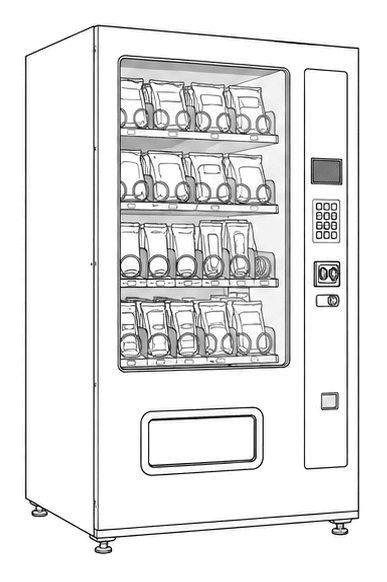
Machine Has No Power — Complete Diagnostic
Dixie-Narco 440 8
Machine Has No Power — Complete Diagnostic
Systematically checks power from wall outlet through internal power distribution to identify where power is lost. Begins with safe non-invasive checks and escalates to internal inspection only when external checks pass.
Qualified technician handoff: stop before live electrical testing, sealed-system refrigeration work, compressor service, or protected-compartment access unless a qualified technician is handling the work.
- Fuse has blown repeatedly or overcurrent event recurs: Stop all energization attempts. Tag machine out of service. Escalate to qualified technician for full short-circuit investigation.
- Live voltage measurement required at controller or internal circuits: Ensure technician is qualified for live-voltage work. Use appropriate PPE. Follow lockout/tagout procedures. If not qualified, stop and hand off.
Checklist
Guided Diagnostic Steps
Work from low-risk checks toward technician-level inspection only when evidence supports it.
You can read or print the route now. The first checkbox click opens the service contact gate.
- 1
Verify Wall Outlet Power
operator-intermediatelowUsing a known-good lamp or outlet tester, confirm the wall outlet provides power. If the outlet is controlled by a switch, ensure the switch is on.
Stop conditions- Outlet shows signs of damage, arcing, or burning — do not use, contact electrician
Expected: Outlet tester or lamp indicates live power at the outlet.
Evidence to note: note
- 2
Inspect Power Cord
operator-intermediatelowWith machine unplugged, visually inspect the full length of the power cord from plug to machine entry point. Look for cuts, kinks, burn marks, melted insulation, or crushed sections.
Stop conditions- Cord has exposed copper or conductors — do not plug in, replace cord first
- Cord is wet — do not plug in
Expected: Power cord insulation is intact with no visible damage.
Evidence to note: photo
- 3
Check Main Fuse or Circuit Breaker
operator-intermediatehighWith machine unplugged, locate the main fuse holder or circuit breaker. Remove and inspect the fuse element if accessible. If a circuit breaker, check its position. Do not probe live circuits.
Stop conditions- Fuse is blackened or shattered — indicates significant fault, do not replace fuse until cause is identified
Expected: Fuse element is intact or circuit breaker is in the ON position.
Evidence to note: photo
- 4
Inspect Internal Power Distribution
operator-intermediatehighWith machine unplugged, open the access panel to the power entry area. Visually inspect the terminal block, wiring connections, and power supply area for signs of overheating, loose connections, or burnt components. Do not touch or probe live circuits.
Qualified technician handoff: stop before live electrical testing, sealed-system refrigeration work, compressor service, or protected-compartment access unless a qualified technician is handling the work.
Stop conditions- Visible arcing damage or melted components — do not energize, hand off to qualified technician
- Burning smell — do not close up or energize
Expected: All connections appear secure with no discoloration or burn marks.
Evidence to note: photo
- 5
Check for Control Board Power Indicator
technician-advancedhighAfter confirming external power path integrity, carefully plug in the machine and observe the controller board area for any LED indicators or display activity. Stand clear of exposed wiring. If no indication is observed after a reasonable startup delay, unplug and proceed to handoff.
Stop conditions- Any component begins to smoke or emit odor — unplug immediately
Expected: Controller board shows some LED activity or display initializes.
Evidence to note: note
Tools for this route
Parts status
Exact public parts list not verified yet. Use this route to identify the system before ordering.
Candidate areas for part verification
Other Possible Issues
Switch routes if this symptom is not the closest match.