
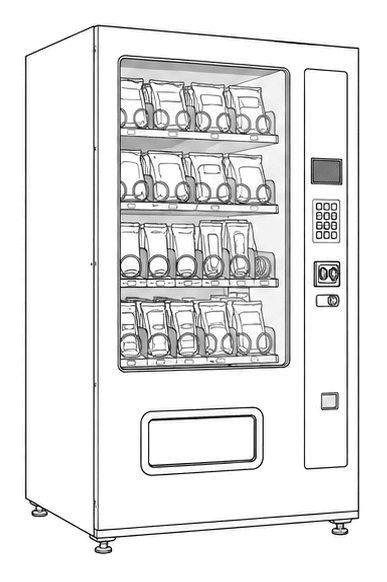
Machine Not Cooling — Diagnostic Flow
Dixie-Narco 440 8
Machine Not Cooling — Diagnostic Flow
Evaluates refrigeration performance starting with safe external observations and environmental checks, then progressing to airflow, sealed-system indicators, and control-system diagnostics. Sealed-system work is restricted to manufacturer-licensed personnel.
Qualified technician handoff: stop before live electrical testing, sealed-system refrigeration work, compressor service, or protected-compartment access unless a qualified technician is handling the work.
- Compressor casing is excessively hot or compressor cycles rapidly on overload: Unplug machine immediately. Allow compressor to cool. Do not restart until root cause is investigated. Hand off to qualified technician.
- Evidence of refrigerant oil loss or unusual hissing from sealed system: Do not puncture or open sealed system. Tag machine out of service. Schedule manufacturer-authorized sealed-system repair.
Checklist
Guided Diagnostic Steps
Work from low-risk checks toward technician-level inspection only when evidence supports it.
You can read or print the route now. The first checkbox click opens the service contact gate.
- 1
Confirm Power and Ambient Conditions
operator-intermediatelowVerify the machine has power (display active, lights on). Check ambient temperature around the machine — is it within normal indoor or approved outdoor range? Is the machine in direct sunlight or near a heat source?
Expected: Machine is powered and ambient conditions are within normal operating range.
Evidence to note: note
- 2
Check Condenser Airflow and Cleanliness
operator-intermediatelowWith machine unplugged, locate the condenser coil area (typically at the bottom rear or lower front depending on configuration). Inspect the condenser fins for lint, dust, or debris buildup. Check that the condenser fan blade area is clear.
Qualified technician handoff: stop before live electrical testing, sealed-system refrigeration work, compressor service, or protected-compartment access unless a qualified technician is handling the work.
Stop conditions- Condenser fan blade is seized or difficult to spin — hand off to technician
Expected: Condenser fins are clean and airflow is unobstructed. Fan blade area is clear.
Evidence to note: photo
- 3
Inspect Door Seal
operator-intermediatelowClose the main door on a thin strip of paper at multiple points around the perimeter. The paper should be firmly gripped. Test the entire seal circumference including corners.
Expected: Paper is gripped firmly at all test points around the door perimeter.
Evidence to note: note
- 4
Listen and Feel for Compressor Operation
operator-intermediatehighWith machine plugged in and calling for cooling, listen near the compressor area. A running compressor produces a steady low hum and slight vibration. Feel the compressor casing gently for vibration. Be cautious of hot surfaces.
Qualified technician handoff: stop before live electrical testing, sealed-system refrigeration work, compressor service, or protected-compartment access unless a qualified technician is handling the work.
Stop conditions- Compressor is extremely hot (uncomfortable to touch briefly) — unplug and allow to cool before further testing
- Loud clicking or buzzing that cycles on and off rapidly — potential start device failure, hand off to technician
Expected: Compressor produces audible hum and detectable vibration indicating it is running.
Evidence to note: note
- 5
Check Compressor Power Supply
technician-advancedlive-voltageWith machine unplugged, locate the compressor electrical connection area. Note the presence of a start device and capacitor. Visually inspect for signs of burnt or damaged start components. Do not probe live circuits unless qualified.
Qualified technician handoff: stop before live electrical testing, sealed-system refrigeration work, compressor service, or protected-compartment access unless a qualified technician is handling the work.
Stop conditions- Start device is visibly burnt or disintegrated — do not energize, replace start device or hand off
- Capacitor is bulging or leaking — do not energize, replace capacitor
Expected: Start device and capacitor appear physically intact with no burn marks or deformation.
Evidence to note: photo
- 6
Check Evaporator Frost Pattern
operator-intermediatehighWith machine running and calling for cooling, carefully observe the evaporator coil through the inspection area. A properly operating system should show even frost formation across the evaporator surface within a reasonable time.
Stop conditions- Evaporator is iced over completely — may need defrost, check defrost system
Expected: Even frost or cold pattern across evaporator coil surface.
Evidence to note: photo
- 7
Measure Product Temperature
operator-intermediatelowPlace a thermometer in a product near the center of the cabinet. Allow sufficient time for stabilization. Compare the reading against the thermostat set point and the expected vend temperature range.
Evidence to note: meter-reading
Tools for this route
Parts status
Exact public parts list not verified yet. Use this route to identify the system before ordering.
Candidate areas for part verification
Other Possible Issues
Switch routes if this symptom is not the closest match.