
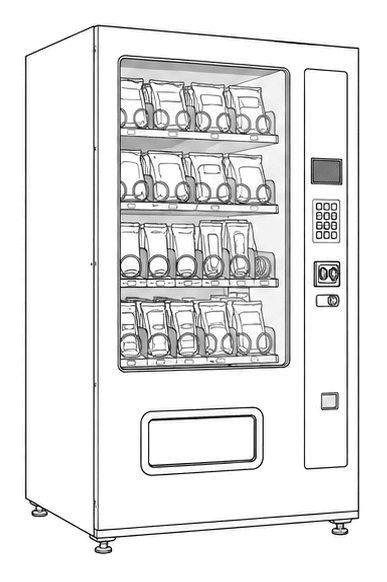
Water Leak Diagnostic
GPL 674 / 676 HotCup
Water Leak Diagnostic
This diagnostic systematically isolates different parts of the water delivery system to accurately identify the precise source of any water leakage from the machine.
Qualified technician handoff: stop before live electrical testing, sealed-system refrigeration work, compressor service, or protected-compartment access unless a qualified technician is handling the work.
- Water contacting any wiring or electrical component: Do not power on. Dry all affected areas. Inspect for corrosion. Verify safety before re-energizing.
- Hot water or steam escaping: Keep clear. Allow machine to cool before approaching. Shut off power and water remotely if possible.
- Because this involves high-hazard water paths and electrical components, any diagnosis or repair must be conducted by a qualified technician.
- If water is found near electrical components, do not re-energize; a qualified technician must inspect for corrosion and verify safety before proceeding.
Checklist
Guided Diagnostic Steps
Work from low-risk checks toward technician-level inspection only when evidence supports it.
You can read or print the route now. The first checkbox click opens the service contact gate.
- 1
Keep clear of the area if hot water or steam is visible, and allow th...
operator-intermediatehighKeep clear of the area if hot water or steam is visible, and allow the machine to cool down first.
Stop conditions- Because this involves high-hazard water paths and electrical components, any diagnosis or repair must be conducted by a qualified technician.
- If water is found near electrical components, do not re-energize; a qualified technician must inspect for corrosion and verify safety before proceeding.
Expected: Initial condition is documented before deeper diagnosis.
Evidence to note: note
- 2
Do not power on the unit if water is observed contacting any wiring o...
operator-intermediatehighDo not power on the unit if water is observed contacting any wiring or electrical component.
Stop conditions- Because this involves high-hazard water paths and electrical components, any diagnosis or repair must be conducted by a qualified technician.
- If water is found near electrical components, do not re-energize; a qualified technician must inspect for corrosion and verify safety before proceeding.
Expected: Initial condition is documented before deeper diagnosis.
Evidence to note: note
- 3
Shut off the main water supply remotely if possible.
operator-intermediatehighShut off the main water supply remotely if possible.
Stop conditions- Because this involves high-hazard water paths and electrical components, any diagnosis or repair must be conducted by a qualified technician.
- If water is found near electrical components, do not re-energize; a qualified technician must inspect for corrosion and verify safety before proceeding.
Expected: Result is documented before continuing the route.
Evidence to note: note
- 4
Inspect visible connections for signs of corrosion or mineral buildup.
operator-intermediatehighInspect visible connections for signs of corrosion or mineral buildup.
Stop conditions- Because this involves high-hazard water paths and electrical components, any diagnosis or repair must be conducted by a qualified technician.
- If water is found near electrical components, do not re-energize; a qualified technician must inspect for corrosion and verify safety before proceeding.
Expected: Result is documented before continuing the route.
Evidence to note: note
- 5
Dry all affected areas thoroughly before any further inspection.
operator-intermediatehighDry all affected areas thoroughly before any further inspection.
Stop conditions- Because this involves high-hazard water paths and electrical components, any diagnosis or repair must be conducted by a qualified technician.
- If water is found near electrical components, do not re-energize; a qualified technician must inspect for corrosion and verify safety before proceeding.
Expected: Result is documented before continuing the route.
Evidence to note: note
- 6
Check the integrity of the water inlet valve.
operator-intermediatehighCheck the integrity of the water inlet valve.
Stop conditions- Because this involves high-hazard water paths and electrical components, any diagnosis or repair must be conducted by a qualified technician.
- If water is found near electrical components, do not re-energize; a qualified technician must inspect for corrosion and verify safety before proceeding.
Expected: Result is documented before continuing the route.
Evidence to note: note
Tools for this route
Location Help
Where to find this
Use this as orientation before touching the machine. It is location help, not a repair instruction.
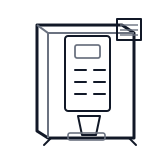
Start at the customer delivery bin and product drop path; clear visible product and debris before moving to internal checks.
- Controls the extraction or mixing process that combines hot water with ingredients to produce the selected beverage.
- Brew chamber or mixing bowl
- Piston or press mechanism
- Brew actuator motor or solenoid
Do not open energized or protected electrical areas unless a qualified technician or licensed electrician is handling the work.
cabinet hot beverage vend motor
 delivery bin
 delivery bin sensor
Parts status
Exact public parts list not verified yet. Use this route to identify the system before ordering.
Candidate areas for part verification
Other Possible Issues
Switch routes if this symptom is not the closest match.