
Unit Not Cooling - Refrigeration Diagnostic Flow
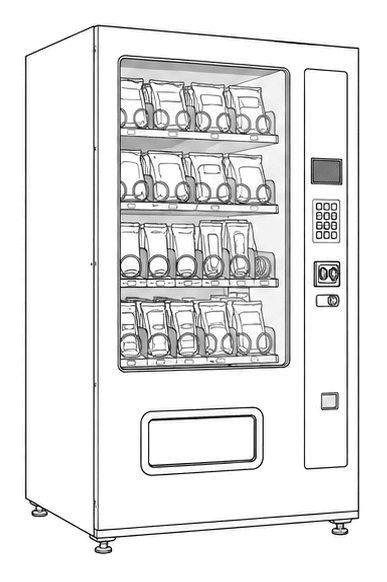
Royal Vendors 480 EZ Vendor
Unit Not Cooling - Refrigeration Diagnostic Flow
Progressive diagnosis from compressor run-state through airflow, condenser cleanliness, door seal, and evaporator condition to determine whether the issue is airflow, control, or sealed-system related.
Qualified technician handoff: stop before live electrical testing, sealed-system refrigeration work, compressor service, or protected-compartment access unless a qualified technician is handling the work.
- Compressor is hot and clicking on and off rapidly: Compressor may be in thermal overload due to sealed-system or start-device failure. Stop and hand off to manufacturer-or-licensed technician.
- Hissing sound or visible refrigerant oil: Probable refrigerant leak. Stop immediately. Sealed-system repair required by manufacturer-or-licensed technician.
- Evaporator is warm while compressor runs and condenser is hot: Possible sealed-system issue. Escalate to manufacturer-or-licensed technician.
Checklist
Guided Diagnostic Steps
Work from low-risk checks toward technician-level inspection only when evidence supports it.
You can read or print the route now. The first checkbox click opens the service contact gate.
- 1
Listen for Compressor Operation
operator-intermediatelowWith the machine plugged in and door closed, listen near the lower back of the machine for compressor hum or feel for vibration on the compressor housing.
Qualified technician handoff: stop before live electrical testing, sealed-system refrigeration work, compressor service, or protected-compartment access unless a qualified technician is handling the work.
Stop conditions- If compressor is extremely hot and clicking - stop, thermal overload, hand off
Expected: Compressor is audibly humming and the housing has slight vibration indicating it is running.
Evidence to note: note
- 2
Check Door Switch Function
operator-intermediatelowOpen the door and locate the door switch. Manually press and release the switch while listening for a click. With the door open, pressing the switch should allow the controller to command refrigeration.
Qualified technician handoff: stop before live electrical testing, sealed-system refrigeration work, compressor service, or protected-compartment access unless a qualified technician is handling the work.
Expected: Door switch clicks audibly and the compressor begins running when the switch is pressed with the door open.
Evidence to note: note
- 3
Check Compressor Power Presence
technician-advancedlive-voltageThis step involves live voltage measurement at the compressor terminals. Only qualified technicians should perform this step. With power on, measure voltage at the compressor power input.
Qualified technician handoff: stop before live electrical testing, sealed-system refrigeration work, compressor service, or protected-compartment access unless a qualified technician is handling the work.
Digital MultimeterStop conditions- If user is not qualified for live voltage measurement - stop and hand off
Expected: Line voltage is present at the compressor terminals when the controller commands cooling.
Evidence to note: meter-reading
- 4
Check Condenser Fan Operation
operator-intermediatelowWhile the compressor is running, observe the condenser fan near the compressor area. The fan should be spinning smoothly without unusual noise.
Qualified technician handoff: stop before live electrical testing, sealed-system refrigeration work, compressor service, or protected-compartment access unless a qualified technician is handling the work.
Expected: Condenser fan spins freely and moves air across the condenser coil.
Evidence to note: photo
- 5
Check Evaporator Condition
operator-intermediatelowLocate the evaporator inside the cabinet. Observe whether the coil surface is cold, frosty, iced over, or warm. Note the frost pattern if present.
Qualified technician handoff: stop before live electrical testing, sealed-system refrigeration work, compressor service, or protected-compartment access unless a qualified technician is handling the work.
Flashlight or Work LightStop conditions- If ice is thick enough to block the fan or deform fins - defrost fully before continuing
Expected: Evaporator coil shows light, even frost indicating proper refrigerant flow and airflow.
Evidence to note: photo
- 6
Check Door Seal Condition
operator-intermediatelowClose the door on a dollar bill or thin paper strip at several points around the perimeter. The bill should have slight resistance when pulled. Check the gasket for tears, hardness, or gaps.
Expected: Gasket seals consistently around the full door perimeter with no gaps.
Evidence to note: photo
- 7
Check Evaporator Fan Operation
operator-intermediatelowWith the unit running and door closed (press door switch to simulate closed door), observe whether the evaporator fan inside the cabinet is running.
Flashlight or Work LightExpected: Evaporator fan runs and circulates air across the coil and through the cabinet.
Evidence to note: photo
Tools for this route
Parts status
Exact public parts list not verified yet. Use this route to identify the system before ordering.
Candidate areas for part verification
Other Possible Issues
Switch routes if this symptom is not the closest match.