
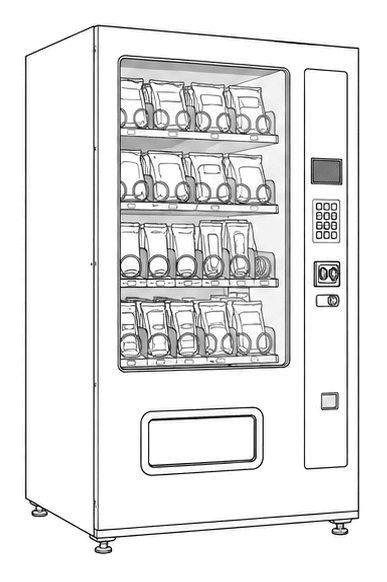
Refrigeration Diagnostic
Royal Vendors R20
Refrigeration Diagnostic
Non-invasive checks for cooling performance, airflow, and component operation before any sealed-system investigation.
Qualified technician handoff: stop before live electrical testing, sealed-system refrigeration work, compressor service, or protected-compartment access unless a qualified technician is handling the work.
- compressor-banging-or-knocking-loudly: power-off-compressor-circuit-immediately
- frost-heavily-covering-evaporator-with-fan-running: investigate-defrost-system-or-airflow-blockage
- sealed-system-work-required: handoff-to-licensed-refrigeration-technician
Checklist
Guided Diagnostic Steps
Work from low-risk checks toward technician-level inspection only when evidence supports it.
You can read or print the route now. The first checkbox click opens the service contact gate.
- 1
Verify Door Seal and Cabinet Closure
operator-intermediatelowClose the door on a dollar bill at several points around the perimeter. The bill should have slight resistance when pulled. If it slides freely, the gasket may be compromised.
Expected: Consistent slight resistance around the entire door seal perimeter.
Evidence to note: note
- 2
Check Condenser Coil Condition
operator-intermediatelowUsing a flashlight, inspect the condenser coil (typically at the rear or bottom of the machine). Look for heavy dust, lint, or debris blocking airflow between fins.
Qualified technician handoff: stop before live electrical testing, sealed-system refrigeration work, compressor service, or protected-compartment access unless a qualified technician is handling the work.
Stop conditions- fins-damaged-or-crushed-extensively
Expected: Condenser fins are visibly clean with open airflow passages.
Evidence to note: photo
- 3
Listen for Compressor and Fan Operation
operator-intermediatelowWith the machine powered and calling for cooling, listen at the lower rear area. Identify whether the compressor is running (low hum/vibration) and whether the condenser fan and evaporator fan are spinning. Do not open any panels for this step.
Qualified technician handoff: stop before live electrical testing, sealed-system refrigeration work, compressor service, or protected-compartment access unless a qualified technician is handling the work.
Stop conditions- loud-banging-or-knocking-from-compressor
Expected: Compressor hum detected, condenser fan audible, evaporator fan audible inside cabinet.
Evidence to note: note
- 4
Measure Product Temperature
operator-intermediatelowPlace a thermometer in a product located mid-height in the cabinet away from the evaporator. Allow sufficient time for stabilization. Compare the reading to the programmed temperature setpoint.
Expected: Product temperature is within the expected range of the setpoint.
Evidence to note: meter-reading
- 5
Check for Compressor Power
technician-advancedlive-voltageIf the compressor is not running, determine if it is receiving power. This step requires measuring voltage at the compressor terminals. Do not perform this step without proper training and PPE. If unsure, hand off to a qualified technician.
Qualified technician handoff: stop before live electrical testing, sealed-system refrigeration work, compressor service, or protected-compartment access unless a qualified technician is handling the work.
Stop conditions- burning-smell
- hot-to-touch-wiring
- discolored-compressor-terminals
Expected: Compressor receives expected line voltage when cooling is called for.
Evidence to note: meter-reading
Tools for this route
Location Help
Where to find this
Use this as orientation before touching the machine. It is location help, not a repair instruction.
Start with exterior airflow, door seal, and temperature-setting checks; treat the lower refrigeration compartment as technician-led.
- Routes line voltage from facility outlet to machine power supply and refrigeration system.
- power-cord
- line-filter
- terminal-block
Do not open sealed-system or compressor areas unless a qualified refrigeration technician is handling the work.
cabinet drink refrigeration bay
 power supply
 terminal block
Parts status
Exact public parts list not verified yet. Use this route to identify the system before ordering.
Candidate areas for part verification
Other Possible Issues
Switch routes if this symptom is not the closest match.