
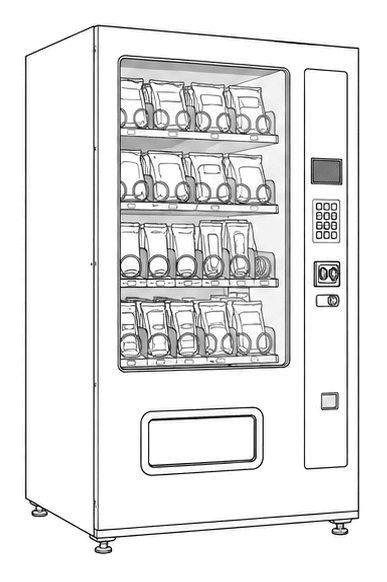
Elevator Stuck at Top (Home Position)
VendnetUSA ADA Elevator Equipped Serie
Elevator Stuck at Top (Home Position)
The elevator platform or bucket is at the upper home position and does not descend when a vend cycle is initiated. This flow checks for obstructions, sensor state, harness continuity, motor function, and controller command output.
Qualified technician handoff: stop before live electrical testing, sealed-system refrigeration work, compressor service, or protected-compartment access unless a qualified technician is handling the work.
- Burning smell detected at any point: stop
- Repeated elevator stall after clearance (3+ occurrences in 30 days): escalate
- Harness damage from elevator mechanism rubbing: stop
Checklist
Guided Diagnostic Steps
Work from low-risk checks toward technician-level inspection only when evidence supports it.
You can read or print the route now. The first checkbox click opens the service contact gate.
- 1
Power Off and Visual Inspection of Elevator Area
technician-advancedtechnicianDisconnect machine power. Open the cabinet using the service key. Using a flashlight, inspect the elevator bucket, guide tracks, drive belt or chain, and surrounding area for any visible obstructions, debris, product items, or physical damage. Check that the elevator platform moves freely when gently nudged by hand (power is off). Check the harness routing near the elevator for signs of rubbing, pinch points, or damage.
Stop conditions- Burning smell
- Visible electrical damage
Expected: A clear understanding of whether an obstruction, physical damage, or harness issue is present.
Evidence to note: photo
- 2
Clear Elevator Obstruction
technician-advancedtechnicianWith power still off, carefully remove any product, debris, or foreign material from the elevator bucket, guide tracks, and drive mechanism area. Use caution not to push debris further into the mechanism. If a product is wedged, gently work it free without forcing the elevator platform. After clearance, manually move the elevator through its full range to confirm free travel.
Stop conditions- Obstruction requires disassembly to remove
- Damage found during clearance
Expected: Elevator platform travels freely from top to bottom with no binding.
Evidence to note: note
- 3
Check Elevator Home Position Sensor
technician-advancedtechnicianWith power still off, locate the home position sensor for the elevator (typically a magnetic reed switch or optical sensor near the top of the elevator travel path). Check that the sensor is securely mounted, the magnet or flag is present and aligned, and no debris is interfering with the sensor. Check the sensor harness connector for security and corrosion.
Expected: Home sensor is securely mounted, properly aligned, and harness is connected without corrosion.
Evidence to note: photo
- 4
Check Elevator Harness Continuity and Connections
technician-advancedtechnicianWith power off, disconnect the elevator harness at the controller end and at the elevator assembly end if accessible. Using a multimeter set to continuity or resistance mode, check each conductor for continuity from end to end. Wiggle the harness gently during measurement to detect intermittent opens. Inspect connector terminals for corrosion, push-back, or discoloration.
Stop conditions- Harness insulation melted or charred
- Connector discolored from overheating
Expected: All harness conductors show continuous low-resistance paths. Connectors are clean and fully seated.
Evidence to note: meter-reading
- 5
Power On and Observe Elevator Motor Response
technician-advancedtechnicianRestore power to the machine. Allow it to complete its boot sequence. Initiate a test vend from service mode or make a test purchase. Observe and listen for any motor activity from the elevator area. Note whether the motor attempts to run, buzzes, or is completely silent.
Stop conditions- Burning smell during power-on test
- Unusual loud noise from motor
Expected: Elevator motor activates and elevator travels to delivery position and returns to home.
Evidence to note: note
- 6
Complete Test Vend Cycle
technician-advancedtechnicianAfter any clearance or adjustment, run at least three complete test vend cycles. Each cycle should include: product dispensing into elevator bucket, elevator descent to delivery position, elevator door opening (if applicable), simulated product retrieval, elevator door closing (if applicable), and elevator return to home position. Observe for smooth, quiet operation throughout.
Expected: All three test vend cycles complete successfully without error codes, unusual noise, or hesitation.
Evidence to note: note
- 7
Obstruction Cleared — Resolved
technician-advancedtechnicianObstruction or mechanical issue resolved. Elevator cycles normally. Document what was found and cleared. Clean the elevator track area. Verify the elevator guide rails and track are free of debris before closing the cabinet. Return machine to service.
Expected: Machine returned to service with elevator functioning correctly.
Evidence to note: note
- 8
Elevator Motor Failure Confirmed
technician-advancedtechnicianThe elevator motor does not operate correctly with known-good power supply and harness continuity. Motor replacement is required. Do not replace until all harness and controller checks have been completed. Verify part compatibility with the specific machine model, serial range, and voltage before ordering. Hand off to qualified technician if motor replacement requires elevator mechanism disassembly.
Expected: Motor replacement scheduled with correct compatible part.
Evidence to note: meter-reading
- 9
Elevator Position Sensor Issue
technician-advancedtechnicianThe home or delivery position sensor shows signs of physical failure, misalignment that cannot be corrected, or harness damage at the sensor. Attempt to realign or re-secure the sensor if it appears simply loosened. If the sensor or its mounting is damaged, replacement is required. Verify sensor type and compatibility before ordering.
Expected: Sensor realigned and functional, or replacement scheduled.
Evidence to note: photo
Tools for this route
Parts status
Exact public parts list not verified yet. Use this route to identify the system before ordering.
Candidate areas for part verification
Other Possible Issues
Switch routes if this symptom is not the closest match.