
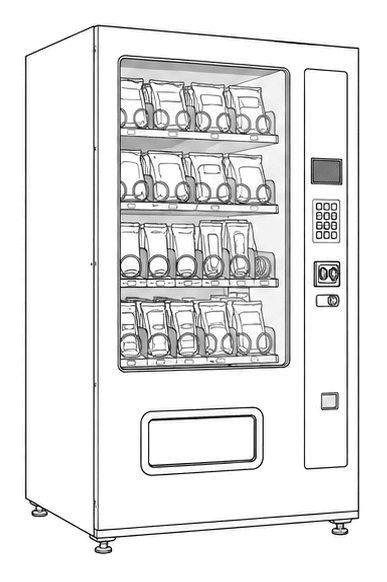
Machine Completely Dead — Power-On Diagnostic
Vendo Vendo V14
Machine Completely Dead — Power-On Diagnostic
Systematically verify power from wall outlet through the machine's power input, fuse, and low-voltage supply to isolate whether the fault is external, in protection circuits, or at the controller.
Qualified technician handoff: stop before live electrical testing, sealed-system refrigeration work, compressor service, or protected-compartment access unless a qualified technician is handling the work.
- Burning smell detected at any point: Immediately unplug and tag out. Escalate to manufacturer-or-licensed service. Do not attempt further diagnosis.
- Water intrusion found near electrical components: Do not apply power. Document location. Escalate to licensed technician for remediation.
- Main fuse blows again immediately after replacement: Do not repeat fuse replacement. Indicates short circuit downstream. Escalate to technician-advanced.
Checklist
Guided Diagnostic Steps
Work from low-risk checks toward technician-level inspection only when evidence supports it.
You can read or print the route now. The first checkbox click opens the service contact gate.
- 1
Inspect Power Cord Integrity
operator-intermediateunpluggedUnplug the machine. Visually inspect the full length of the power cord from plug to machine entry point. Look for cuts, kinks, melted sections, fraying, or signs of rodent damage. Feel along the cord for soft or swollen spots.
Stop conditions- Cord is damaged — do not plug in until replaced.
Expected: Power cord is continuous, flexible, and free of visible damage.
Evidence to note: photo
- 2
Wall Outlet Has No Power
operator-intermediatelowTest the wall outlet with a known-good lamp or outlet tester. Check the circuit breaker panel for tripped breakers. If a breaker has tripped, reset once. If it trips again, stop — do not persist.
Stop conditions- Breaker trips repeatedly — stop and call licensed electrician.
Expected: Wall outlet provides confirmed power.
Evidence to note: note
- 3
Check Main Fuse or Circuit Protection
operator-intermediateunpluggedWith machine unplugged, locate the main fuse or circuit-protection device. Remove and visually inspect. If a multimeter is available, check continuity across the fuse.
Stop conditions- Fuse is blackened or exploded — indicates serious short downstream. Do not replace fuse until short is located.
Expected: Fuse shows continuity and no visible signs of failure (darkened glass, broken element).
Evidence to note: meter-reading
- 4
Replace Main Fuse
operator-intermediatehighReplace with a fuse of identical rating and type only. Do not substitute a higher-rated fuse. Power on and observe. If the new fuse blows immediately, stop and escalate.
Stop conditions- Replacement fuse blows immediately — do not install a third fuse. Escalate.
Expected: Machine powers on normally after fuse replacement.
Evidence to note: note
- 5
Replace Damaged Power Cord
operator-intermediatehighObtain a replacement cord matching the machine's voltage and current rating. Unplug old cord. Install new cord following the strain-relief and terminal-block connection method appropriate for this model. Verify all connections are secure before powering on.
Qualified technician handoff: stop before live electrical testing, sealed-system refrigeration work, compressor service, or protected-compartment access unless a qualified technician is handling the work.
Stop conditions- Terminal block shows heat damage — escalate to licensed technician.
Expected: New cord installed securely; machine powers on.
Evidence to note: meter-reading
- 6
Verify Display Activity After Power Restore
operator-intermediateobserverWith power restored, observe the display. Look for any illumination, segment activity, or initialization sequence. Allow 10 seconds for boot-up.
Expected: Display shows some activity — segments lit, initialization sequence, or error code.
Evidence to note: photo
- 7
Inspect Display Connector and Harness
operator-intermediateunpluggedUnplug machine. Access the display panel area. Inspect the harness connector for corrosion, loose pins, or heat damage. Reseat the connector firmly.
Stop conditions- Connector pins blackened or melted — do not power on. Replace harness.
Expected: Connector is clean, fully seated, and pins are straight.
Evidence to note: photo
- 8
Inspect Product Column Loading
operator-intermediateunpluggedOpen the machine door. Visually inspect each product column. Check that products are correctly oriented, properly seated, and not overlapping or wedged. Ensure keepers and dividers are in place and aligned.
Stop conditions- Broken glass or sharp debris in product area — wear gloves and clean before proceeding.
Expected: All products sit freely in columns with no binding or overlap.
Evidence to note: photo
- 9
Correct Product Loading
operator-intermediateunpluggedRemove all products from the affected column. Inspect the column track for debris or damage. Reload products one at a time, ensuring each sits flat and advances freely.
Expected: Products move freely through the column without binding.
Evidence to note: note
- 10
Test Motor Activation
operator-intermediatehighWith door closed or door-switch bypassed per manufacturer procedure, initiate a vend cycle for the affected selection. Listen and observe whether the motor activates.
Stop conditions- Motor sparks or emits burning smell — unplug immediately.
Expected: Motor rotates or cycles when vend is initiated.
Evidence to note: photo
- 11
Check Motor Power and Signal
operator-intermediateunpluggedUnplug machine. Inspect the motor harness connector for the affected column. Check for corrosion, loose pins, or damage. If qualified, use a multimeter to check for continuity in the motor winding.
Expected: Harness connector intact; motor winding shows continuity.
Evidence to note: meter-reading
- 12
Inspect Dispensing Mechanism
operator-intermediateunpluggedWith machine unplugged, manually rotate the dispensing mechanism for the affected column. Feel for binding, grinding, or obstruction. Check that the rotor or cam moves freely through its full cycle.
Expected: Mechanism rotates smoothly without catching or grinding.
Evidence to note: photo
Tools for this route
Location Help
Where to find this
Use this as orientation before touching the machine. It is location help, not a repair instruction.
Start outside the machine at the outlet and cord, then identify the power entry area before any protected-compartment inspection.
- Receives mains power and distributes to internal power supply and protection circuits.
- Power cord
- Line filter
- Main fuse or circuit breaker
Do not open energized or protected electrical areas unless a qualified technician or licensed electrician is handling the work.
 cabinet glass front
 control board generic
 power supply
 terminal block
Parts status
Exact public parts list not verified yet. Use this route to identify the system before ordering.
Candidate areas for part verification
Other Possible Issues
Switch routes if this symptom is not the closest match.